

Sulforaphane has quietly become one of the most researched natural compounds in nutrition. It activates the body’s master detox switch (the Nrf2 pathway), supports phase II liver detoxification, helps neutralize oxidative stress, and shows up in clinical research for everything from cellular health to healthy aging.
The catch is that the best sulforaphane supplement on the market is not necessarily the one with the loudest marketing or the biggest milligram number on the front of the bottle.
Source material matters. Bioavailability matters. Dose matters. Testing matters. Even the type of cruciferous vegetable the extract comes from changes the equation.
This guide ranks the top 8 sulforaphane supplements for 2026, breaks down what the labels actually mean, and answers the most common questions people ask before buying. The goal is to help you find a supplement that delivers real, clinically-relevant doses of bioactive sulforaphane, not just marketing claims dressed up in green packaging.
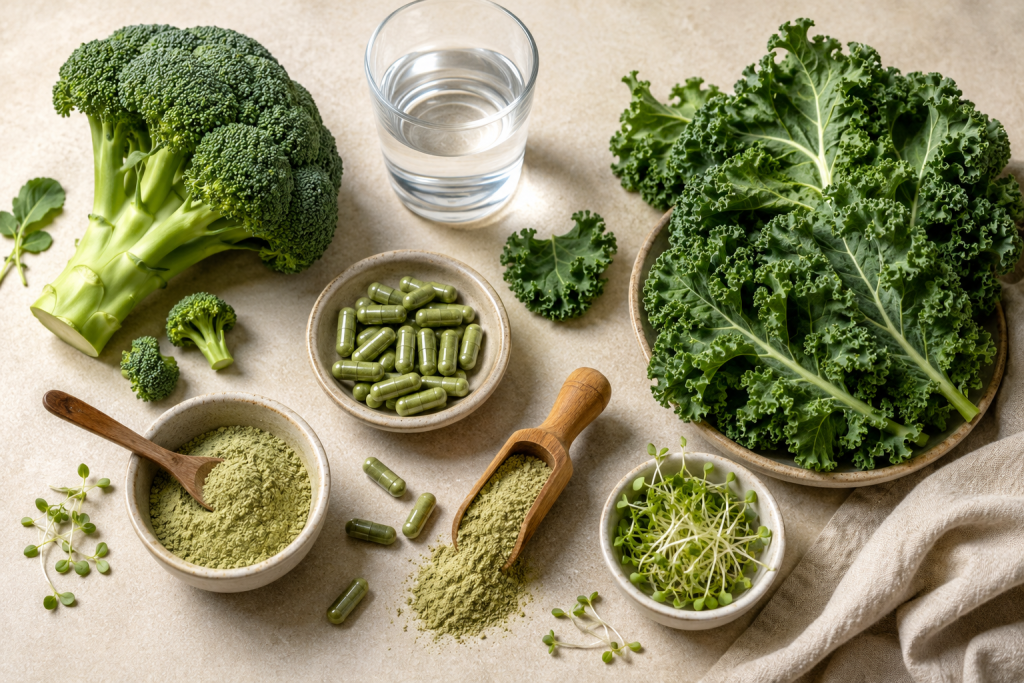
Table of Contents
- What is sulforaphane and why is it worth supplementing?
- What to look for in the best sulforaphane supplement
- The 8 Best Sulforaphane Supplements:
- Sulforaphane supplement comparison chart:
- Frequently asked questions about sulforaphane supplements
- What is the best sulforaphane supplement to take daily?
- How much sulforaphane should I take per day?
- What is the difference between sulforaphane and sulforaphane glucosinolate?
- Is broccoli or kale better for sulforaphane?
- Are broccoli sprouts better than a sulforaphane supplement?
- Does sulforaphane need myrosinase to work?
- When is the best time to take a sulforaphane supplement?
- What are the benefits of taking sulforaphane?
- Are sulforaphane supplements safe?
- The verdict: the best sulforaphane supplement for 2026
What is sulforaphane and why is it worth supplementing?
Sulforaphane is a sulfur-rich compound found naturally in cruciferous vegetables like broccoli, kale, brussels sprouts, and cabbage. It is not present in the plant in its active form. Instead, the plant stores a precursor compound called sulforaphane glucosinolate (SGS, also known as glucoraphanin). When the plant tissue is damaged (by chewing, chopping, or digestion), an enzyme called myrosinase converts SGS into active sulforaphane.
Once active, sulforaphane is one of the most potent known activators of Nrf2, a transcription factor that switches on more than 200 protective genes in the body. These genes drive the production of glutathione, glutathione S-transferase, superoxide dismutase, and other antioxidant and detox enzymes. The end result is a coordinated upregulation of your body’s natural defense systems against oxidative stress, environmental toxins, and inflammation.
In clinical research, sulforaphane has been studied for liver detoxification, cardiovascular markers, inflammatory balance, glucose metabolism, cellular health, and clearance of environmental pollutants including air pollution byproducts, BPA, and other plasticizers.
The supplement industry has responded by flooding the market with products at vastly different doses, sources, and quality levels. Most of them are not worth your money. The ranking below identifies the ones that are.
What to look for in the best sulforaphane supplement
Five factors separate the strong products from the rest of the field.
1. Dose of sulforaphane glucosinolate (SGS)
Most clinical research on sulforaphane supplementation uses doses in the 30 to 120 mg per day range of SGS (also called glucoraphanin). A high-dose sulforaphane supplement should deliver at least 30 mg SGS per capsule, with the strongest products on the market reaching 50 mg per serving. Products labeled with “sulforaphane” content of a few hundred micrograms are typically reporting trace amounts of preformed sulforaphane, which is unstable, rather than the SGS precursor that actually drives the clinical effect.
2. Source: broccoli vs kale vs blended
The vast majority of sulforaphane supplements use broccoli seed or broccoli sprout extract. Kale-sourced sulforaphane is much less common in the supplement world but worth understanding. Kale contains the same glucoraphanin precursor as broccoli, alongside a richer profile of supporting glucosinolates, polyphenols, and carotenoids that broccoli does not provide. A high-quality black kale extract delivers the SGS dose plus the secondary phytonutrients that come along for the ride.
3. SGS versus preformed sulforaphane labeling
This is the most confusing part of the category. Sulforaphane itself is unstable and degrades quickly, so almost no supplement on the market actually contains meaningful amounts of preformed sulforaphane despite the marketing. What stable supplements contain is sulforaphane glucosinolate (SGS, also called glucoraphanin), the stable precursor your body converts into sulforaphane during digestion. When a label says “50 mg sulforaphane glucosinolate,” that is what you want. When a label says “50 mg sulforaphane” without specifying glucosinolate, that claim warrants closer scrutiny.
4. Myrosinase and bioavailability support
Myrosinase is the enzyme that converts SGS into active sulforaphane. The plant produces it, and your gut bacteria also produce it. Some supplements add isolated myrosinase (often from mustard seed) to improve conversion. Others rely on your gut microbiome to handle the conversion, which the clinical evidence shows works reliably — many of the most-studied sulforaphane interventions, including some major NIH-funded trials, use SGS without added myrosinase and still achieve clinically meaningful blood levels. Vitamin C also supports myrosinase activity and is a common pairing.
5. Third-party testing and manufacturing standards
Look for products manufactured in NSF-registered or cGMP-certified facilities, with third-party testing for identity, potency, and purity. Sulforaphane potency is difficult to verify without independent lab analysis, and the gap between label claim and actual content varies widely across the category.
The 8 Best Sulforaphane Supplements:
Below is a comprehensive list of the best sulforaphane supplements on the market.
1. Utzy Naturals SulforaKale™ (Best Overall Sulforaphane Supplement)
SulforaKale™ takes the top spot for combining the highest practical SGS dose with a distinctive kale source that the rest of the category does not offer. Each capsule delivers 50 mg of sulforaphane glucosinolate from PurebKale™, a clinically studied black kale extract sourced from Central Italy, along with vitamin C to support myrosinase activity during digestion.
Why SulforaKale™ ranks first among the best sulforaphane supplements:
- High-dose 50 mg SGS per serving. Matches the highest dose in the category, putting it on par with Thorne and well above mass-market options.
- Kale-sourced PurebKale™. Black kale extract from Central Italy delivers SGS alongside a broader phytonutrient profile (polyphenols, carotenoids, supporting glucosinolates) that broccoli-only extracts miss.
- Third-party tested. Independently verified for identity, potency, and purity. Made in an NSF-registered Wisconsin facility.
- Direct-to-consumer. No practitioner account required, with subscribe-and-save pricing available.
- Vegan, non-GMO, gluten-free. Free of soy, artificial colors, flavors, and preservatives.
- 90-day empty bottle guarantee. Try it and return the bottle if it does not work.
This is the formula to reach for if you want a high-dose, distinctively-sourced sulforaphane supplement backed by serious manufacturing standards.
Why SulforaKale™ is the best sulforaphane supplement
SulforaKale™ by Utzy Naturals delivers 50 mg of sulforaphane glucosinolate per capsule from PurebKale™, a clinically studied black kale extract sourced from Central Italy. Most sulforaphane supplements use broccoli, which provides the SGS precursor but misses the polyphenols, carotenoids, and supporting glucosinolates that come naturally with kale. The 50 mg dose is at the top of the category and lands in the clinically-relevant range used in published sulforaphane research, with vitamin C included to support the body’s natural conversion of SGS into bioactive sulforaphane.
It is third-party tested, manufactured in an NSF-registered Wisconsin facility, vegan, non-GMO, gluten-free, sold direct-to-consumer without practitioner gatekeeping, and backed by a 90-day empty bottle guarantee. For a high-dose, kale-sourced sulforaphane supplement without compromises, SulforaKale™ is the most complete option on the market.
2. Nutramax Avmacol Extra Strength (Most Clinically-Studied)
Avmacol Extra Strength by Nutramax Laboratories has the strongest clinical research portfolio of any sulforaphane supplement on the market. It is the active study product in NIH-funded trials at the University of Pittsburgh, University of Rochester, Johns Hopkins, and other major research institutions, with published studies in lung cancer prevention, chronic kidney disease, autism spectrum disorder, and more.
Each tablet contains approximately 30 mg of glucoraphanin plus active myrosinase enzyme from broccoli sprouts, designed to maximize in-gut conversion to sulforaphane. The trade-off is that the per-tablet dose is lower than the leaders, and clinical study protocols often call for multiple tablets per day (4 to 8 tablets in some trials). For users who want research-validated dosing and don’t mind the higher pill count, Avmacol is the obvious choice. Pricing runs around $40 to $55 per bottle depending on count.
3. Thorne Broccoli Seed Extract
Thorne’s formula delivers 50 mg of sulforaphane glucosinolate from a combination of broccoli and kale seed extracts, with added myrosinase from mustard seed and 100 mg of vitamin C for enhanced bioavailability. The brand is third-party content certified, NSF GMP-compliant, and trusted by professional sports teams and clinical practitioners.
This is the closest direct competitor to SulforaKale™ on dose, and the inclusion of added myrosinase is a legitimate advantage. The trade-offs are price (around $67 for 60 capsules) and the broccoli-dominant blend, which provides less of the kale-specific phytonutrient profile.
4. Pure Therapro Rx OncoProtect ES
A high-dose, single-capsule formulation using 706 mg of patented BroccoRap